
What Are Peptides? The Science, the Hype, and the Safety Line
Peptides are real biology, but the internet has turned the word into a fog machine. Some peptides are natural signals in the body, some are licensed medicines, some are skincare ingredients, and some are unapproved products sold with claims that outrun the evidence.
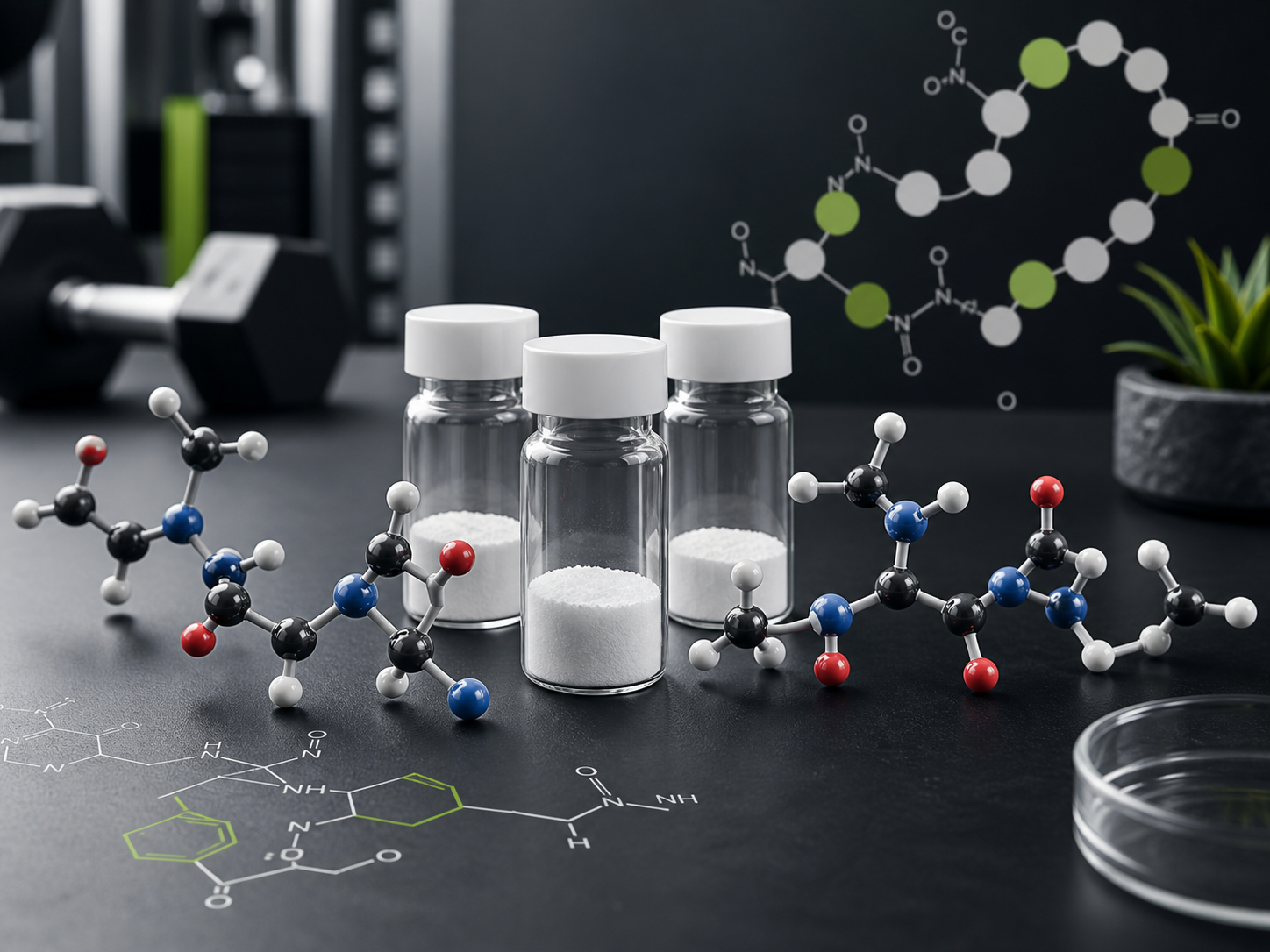
The short version
A peptide is a short chain of amino acids. Amino acids are the building blocks of proteins, and the order of those amino acids determines what a peptide can do.
Peptides can act like signals. Depending on the peptide, they may influence appetite, insulin release, digestion, inflammation, tissue repair, water balance, or other hormone pathways.
That does not make all peptides safe, useful, legal, or interchangeable. The category is huge, and the details matter.
What peptides are
Think of a peptide as a short biological message. Your body makes many of them naturally, and cells use them to communicate with other cells.
Some peptides are tiny fragments. Others are larger and closer to small proteins. Some are quickly broken down, while others are modified to last longer or reach a specific receptor.
This is why the word “peptide” on its own tells you very little. Insulin, collagen fragments, GLP-1 medicines, skincare peptides, and experimental research compounds all live in the same broad family, but they are not the same thing.
What they do
Peptides work by interacting with biological targets, often receptors on cells. A receptor is like a lock, and the peptide is one possible key.
For example, some peptide medicines mimic natural gut hormones that affect appetite, blood sugar, and stomach emptying. Other peptides may be involved in immune signalling, blood pressure control, or tissue remodelling.
The effect depends on the exact molecule, dose, route, person, condition, and product quality. That is the bit the hype usually skips.
How they are made
In the body, peptides are made by cells assembling amino acids in a specific order, or by cutting larger proteins into smaller signalling fragments.
In a lab, many peptides are made using solid-phase peptide synthesis, where amino acids are added one by one to build the chain. Larger or more complex peptide medicines can also be made with biotechnology.
For medicines, manufacturing is not just “make the molecule”. It also means proving identity, purity, sterility, stability, concentration, packaging, storage, and consistency from batch to batch.
Why GLP-1 medicines come up
A lot of modern peptide discussion is really discussion about GLP-1-related medicines. Semaglutide and tirzepatide are prescription medicines used for specific approved indications, depending on the product and country.
Retatrutide is often discussed online too. As of the date of posting, retatrutide has not yet been approved, but it is in phase 3 clinical trials. It should not be treated as the same thing as a licensed medicine bought through a regulated pharmacy.
These medicines belong in clinical care, not casual supplement culture. They can have side effects, contraindications, interactions, and monitoring needs.
Where the hype starts
The hype usually begins when a real biological mechanism gets turned into a much bigger promise. “This pathway is involved in repair” becomes “this will heal your injury”. “This hormone affects appetite” becomes “this is an easy body-transformation tool”.
Recovery and “healing” peptides are a good example. Some products are marketed around tissue repair, tendon issues, inflammation, or faster return to training, but many claims rely on early research, animal data, theory, or products that are not approved medicines.
If a product is sold online as “research only” while being promoted for human results, that is not a clever loophole. It is a safety warning wearing a lab coat.
The safety line
The safety line is simple: approved medicines should be used only for the right person, the right indication, and under qualified medical supervision. Unapproved research products, mystery blends, and unclear online vials should not be treated as health products.
Be especially cautious with anything injectable, anything affecting appetite or blood sugar, anything claiming hormone effects, and anything with unclear ingredients, storage, sterility, or concentration.
This article is general education, not medical advice. It should not be used to diagnose, prescribe, dose, inject, compound, or replace care from a qualified clinician.
Peptides are not magic and they are not one thing. Learn the biology, be sceptical of the hype, and keep a hard line between regulated medical care and unapproved products sold with big promises.