
Creatine: What It Is and How to Use It
Creatine is one of the most studied sports supplements for strength training. It is not a stimulant, it is not a shortcut, and it works best when it supports consistent training, nutrition, sleep, and progressive overload.
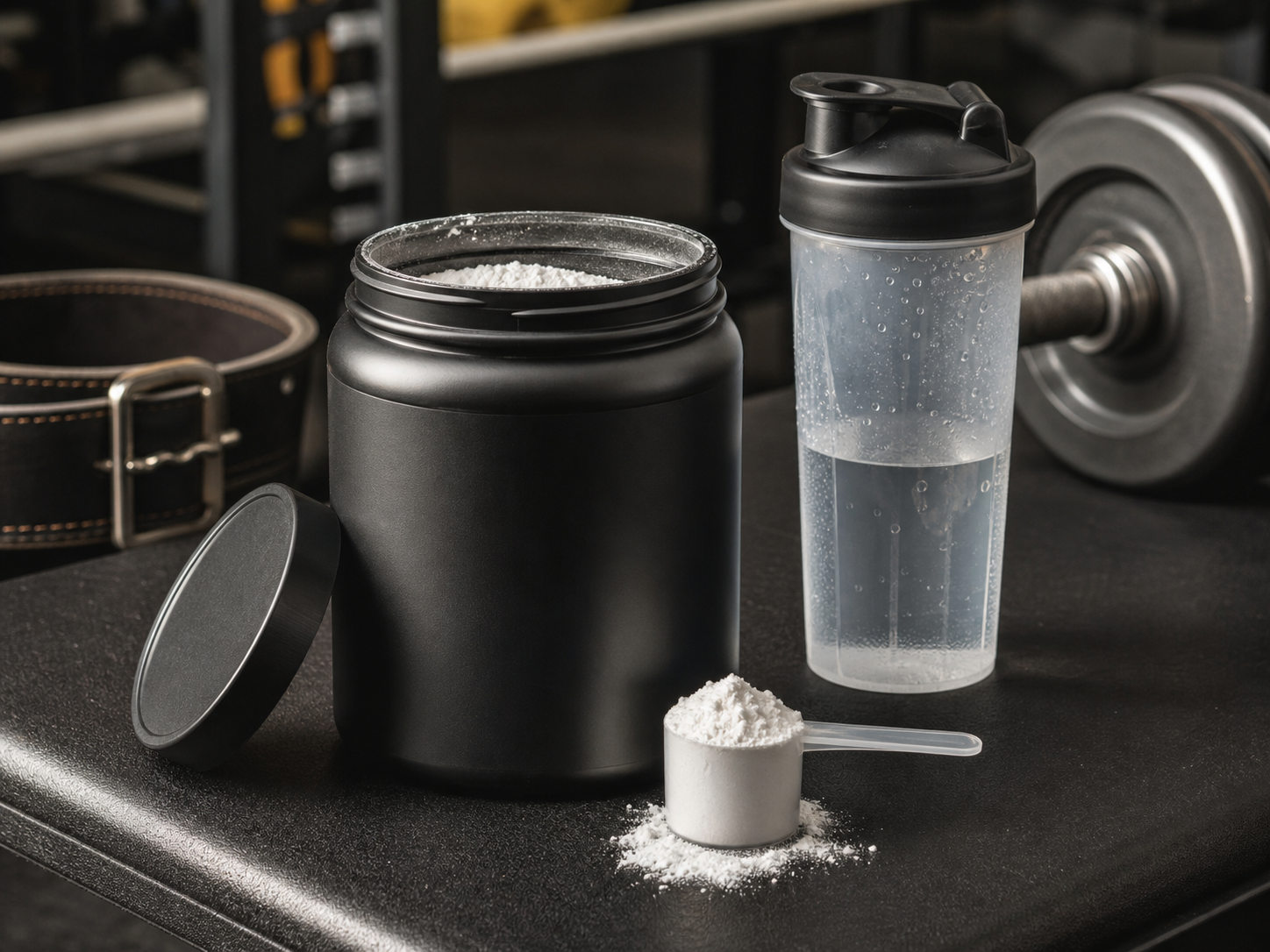
What creatine is
Creatine is a compound your body makes from amino acids and stores mostly in muscle as phosphocreatine. You also get small amounts from foods such as meat and fish.
During hard, short bursts of effort, phosphocreatine helps regenerate ATP, the quick energy currency your muscles use for heavy sets, sprints, jumps, and repeated high-intensity work.
Supplementing creatine raises muscle creatine stores over time. That does not replace training effort, but it can help you produce or repeat slightly more work in the types of sessions that drive strength and muscle gain.
What it is used for
Most lifters use creatine to support strength, power, repeated sprint ability, and higher-quality resistance training volume. It is especially relevant for sets that are heavy, explosive, or close to failure.
Creatine is also used in some clinical and ageing-related contexts, but a gym-focused approach should keep the claim simple: it can support performance in repeated high-intensity efforts when your training is already well structured.
It is not usually useful as an acute pre-workout. Timing matters less than taking it consistently enough to saturate muscle stores.
Reported benefits
The most reliable benefits are small but meaningful improvements in strength, power output, and repeated high-intensity exercise capacity. Over months of training, that can contribute to more total quality work.
Many people gain scale weight during the first few weeks because creatine increases water stored inside muscle. That is not the same as gaining fat, and it is one reason muscles may look a little fuller.
Some research also reports potential benefits for recovery, glycogen storage, heat tolerance, and cognitive or health outcomes, but those effects vary more by population and context than the performance benefits.
How to dose it
The simplest method is 3 to 5 grams of creatine monohydrate every day. This gradually saturates muscle stores over a few weeks and is easy to stick with.
A faster loading approach is 20 grams per day for 5 to 7 days, split into 4 smaller servings, then 3 to 5 grams per day after that. Loading is optional; it gets you saturated sooner but is more likely to cause stomach discomfort.
Take creatine with water or any normal meal. Consistency matters more than taking it before or after training, and you do not need to cycle off it for normal supplement use unless a clinician has told you otherwise.
Side effects and safety
The most common side effects are water-weight gain and occasional digestive upset, especially with large single doses. Splitting the dose or using the simple daily approach usually helps.
Creatine can raise blood creatinine on a lab test because creatinine is a breakdown product of creatine. That does not automatically mean kidney damage, but anyone with kidney disease, relevant medical conditions, or prescribed medication concerns should ask a qualified clinician before using it.
Choose products that are third-party tested where possible, especially if you compete in tested sport. Avoid combining supplement claims with extreme dosing, dehydration practices, or products that hide ingredient amounts in proprietary blends.
Different forms
Creatine monohydrate is the default choice. It is the most studied, widely available, effective, and usually the cheapest form.
Creatine hydrochloride, buffered creatine, creatine nitrate, creatine citrate, liquid creatine, and other forms are often marketed as easier to absorb or less bloating. Some people may prefer the taste or feel, but the evidence does not consistently show better results than monohydrate.
If regular creatine monohydrate bothers your stomach, try a smaller dose, split servings, taking it with food, or micronised monohydrate before paying more for a specialised form.
Who should consider it
Creatine is most worth considering if you lift consistently, train hard enough to progress, and want support for strength, power, and muscle gain. It will not fix a poor programme or low protein intake.
Teenagers, pregnant people, people with kidney disease, and anyone managing medical conditions should get personalised medical guidance rather than treating supplement advice as one-size-fits-all.
For most healthy adult lifters, the practical stack is boring: creatine monohydrate, enough protein, enough calories for the goal, progressive training, and sleep you can repeat.
Use creatine monohydrate first, take 3 to 5 grams daily, and judge it by months of consistent training rather than a single workout. Keep the supplement simple so the work stays the main signal.